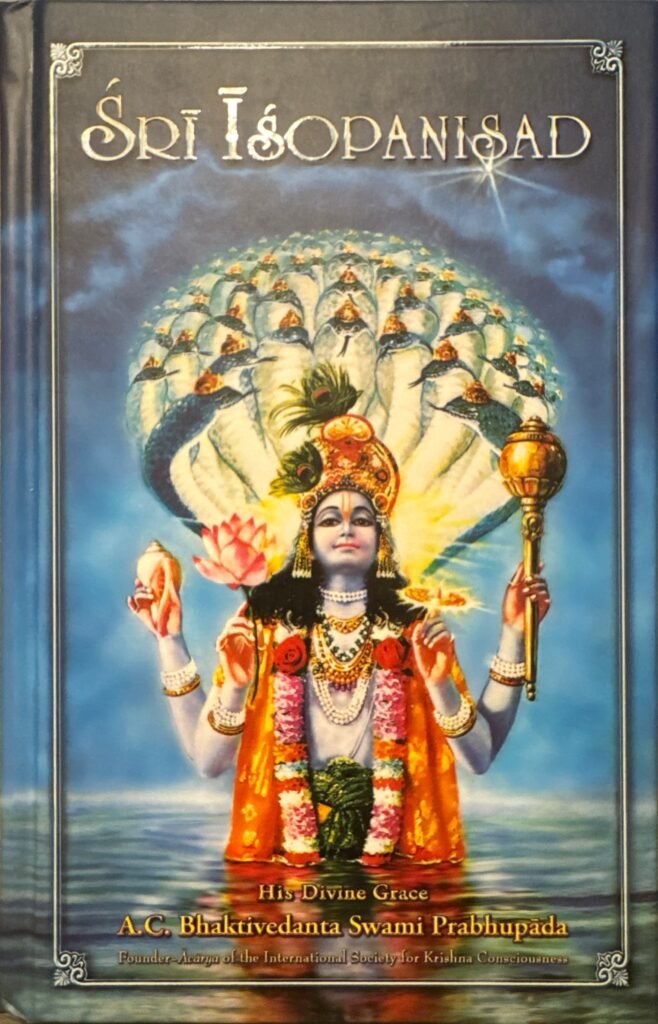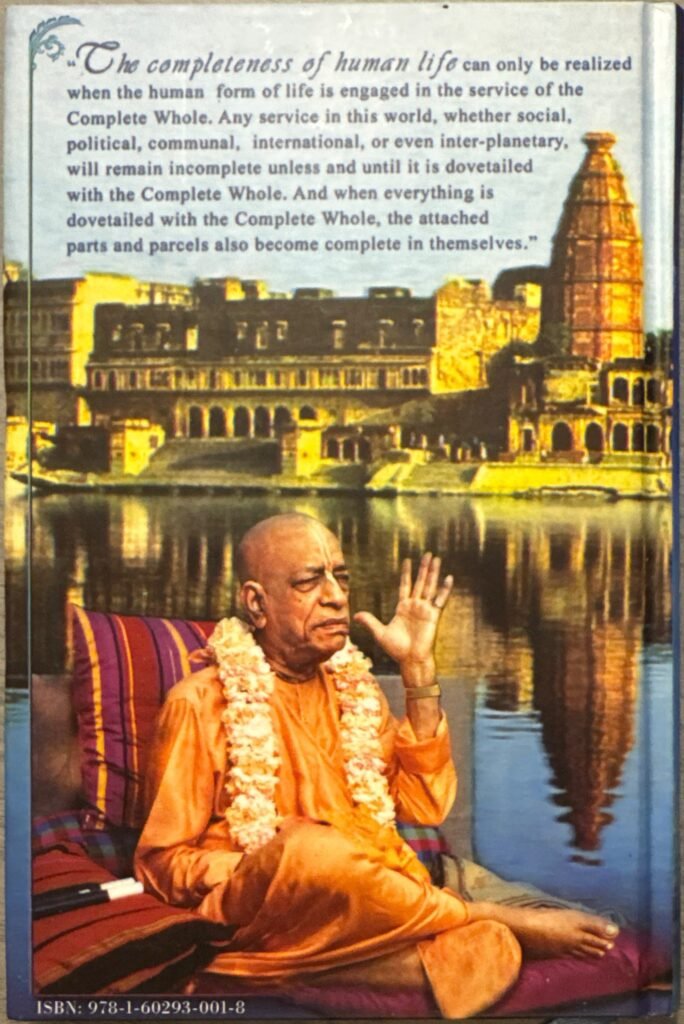
As a foundational “spiritual lawbook” within the Vedic canon, Sri Isopanisad is renowned for its concise nature—spanning just 18 mantras—and its essential role in defining the connection between the individual soul and the Absolute Truth.
Core Philosophy & Themes
The text outlines a blueprint for spiritual harmony through several key concepts:
- Isavasya (Universal Stewardship): The inaugural mantra posits that the Supreme Lord owns and controls the entire universe. Consequently, individuals are encouraged to live within their “allotted quota,” taking only what is necessary and refraining from infringing upon the property of others.
- The Nature of the Divine: It presents a paradoxical view of the Absolute—simultaneously personal and impersonal, distant yet intimate—challenging the seeker to perceive the Divine presence within every atom and living being.
- Wisdom vs. Ignorance: The text differentiates between genuine spiritual realization and mere materialistic pursuit (nescience), cautioning that a life devoted solely to the latter results in profound spiritual darkness.
- The Human Purpose: It identifies “self-realization” as the primary objective of human existence, suggesting that to ignore this responsibility is equivalent to “soul-killing” (atma-ha).
Historical & Scriptural Origins
- The Yajur Veda: Sri Isopanisad holds a unique status as part of the Samhita (mantra) section of the Sukla (White) Yajur Veda, making it one of the most ancient and authoritative of all Upanishads.
- The Primary Text: Within the traditional Muktika canon of 108 Upanishads, it is consistently ranked as the first, serving as the definitive gateway to Vedic philosophy.
- Aural Tradition: It is regarded as apauruṣeya (of non-human origin), preserved through sruti (divine hearing) and transmitted through an unbroken lineage of spiritual masters dating back to the beginning of creation.
Srila Prabhupada published his translation of Sri Isopanisad in 1969. The book’s publication was an effort to provide a concise “spiritual lawbook” for the Western world during the height of the 1960s cultural revolution. The famous introduction, “Teachings of the Vedas,” was transcribed from a lecture Prabhupada delivered on October 6, 1969, at Conway Hall in London. This was added to the manuscript to provide Western readers with the necessary context for the Sanskrit mantras. Srila Prabhupada insisted on a rigorous format including the original Devanagari Sanskrit, Roman transliteration, word-for-word synonyms, and elaborate “Purports” (commentaries) to ensure the text would be accepted by scholars and universities.
First Edition 1969
Click here to read scanned book.
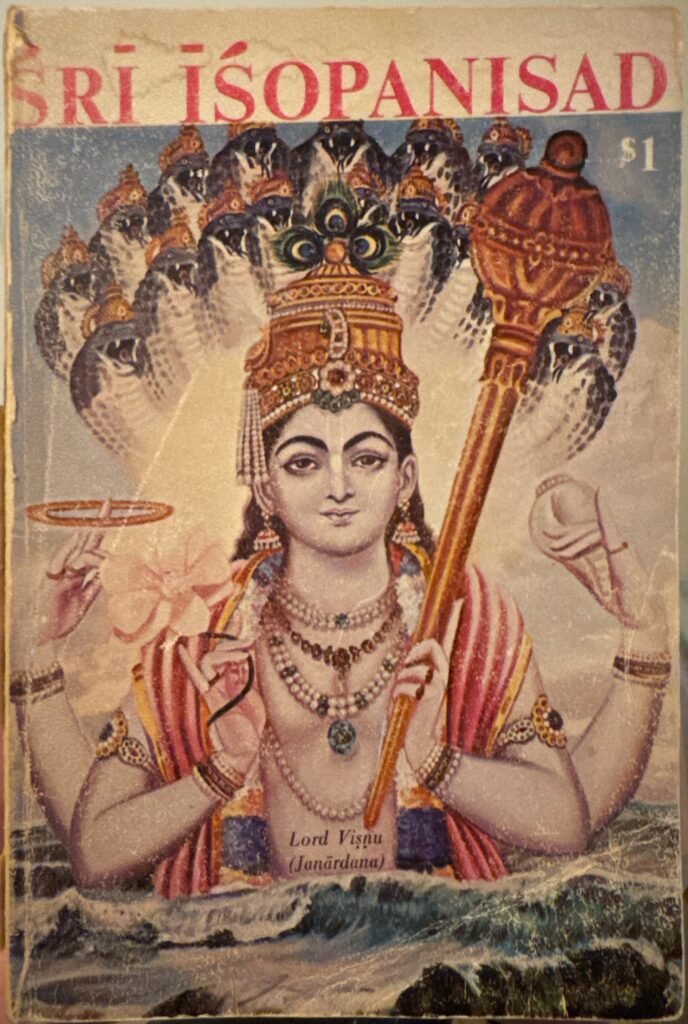
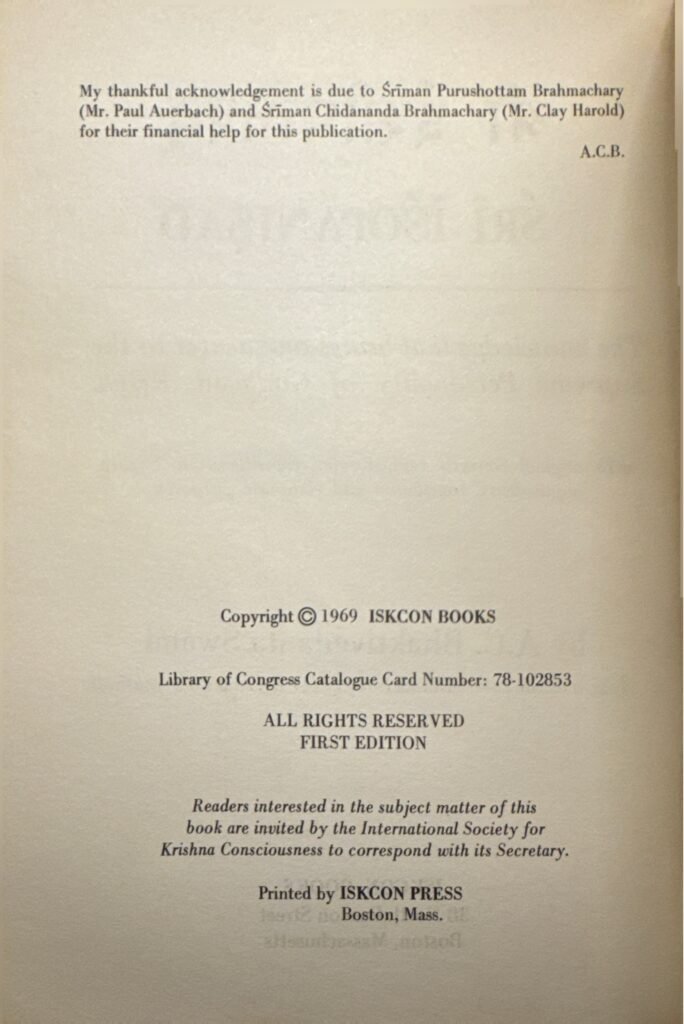
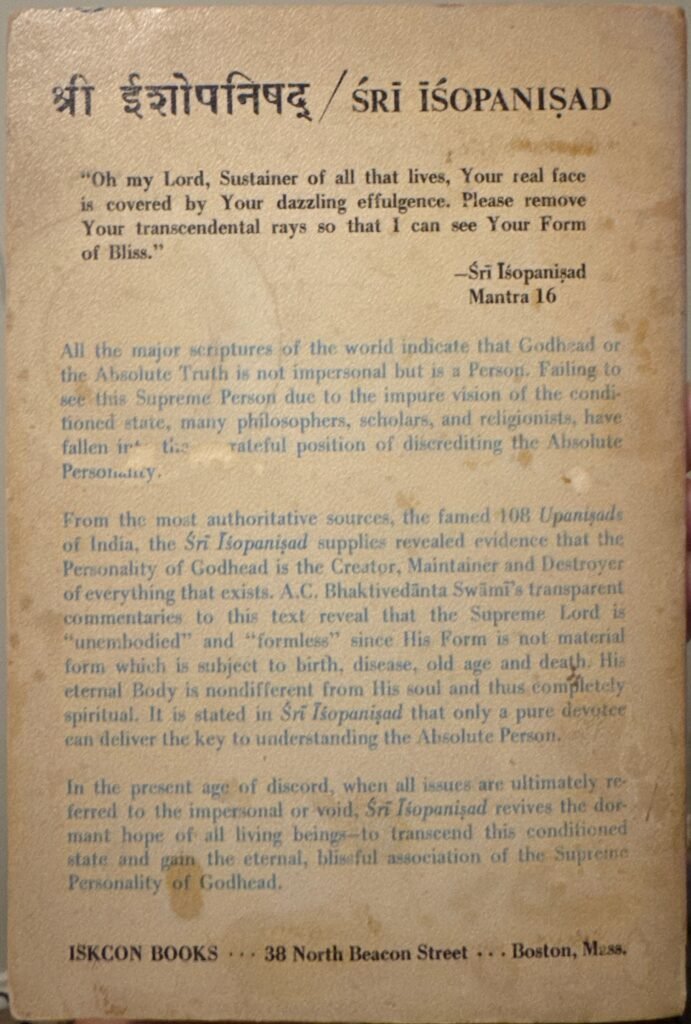
Second Edition, Copyright 1969
Click here to read scanned book.
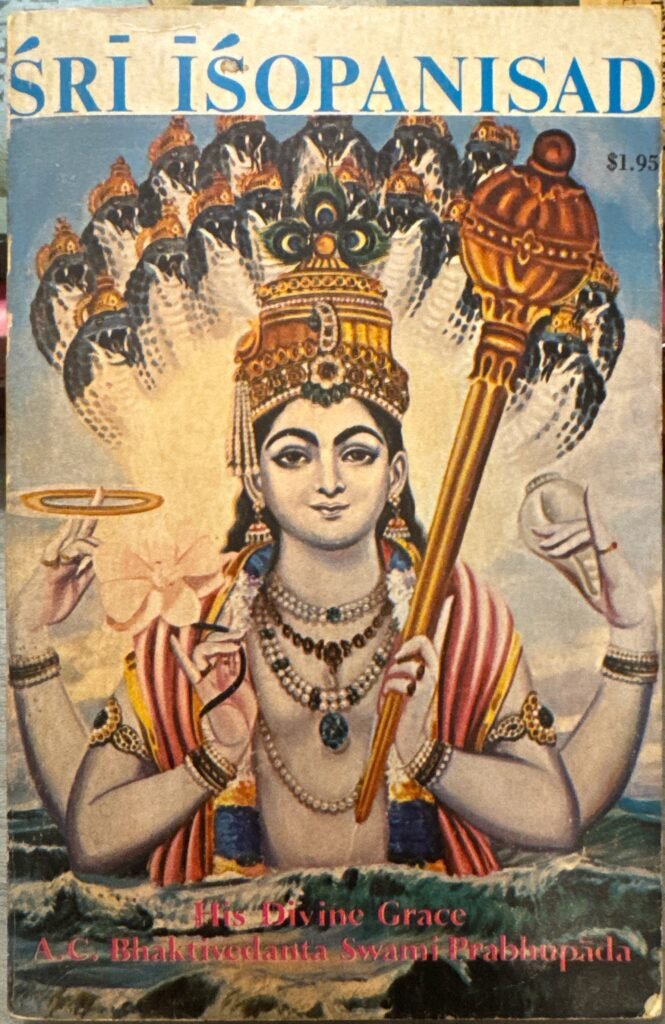
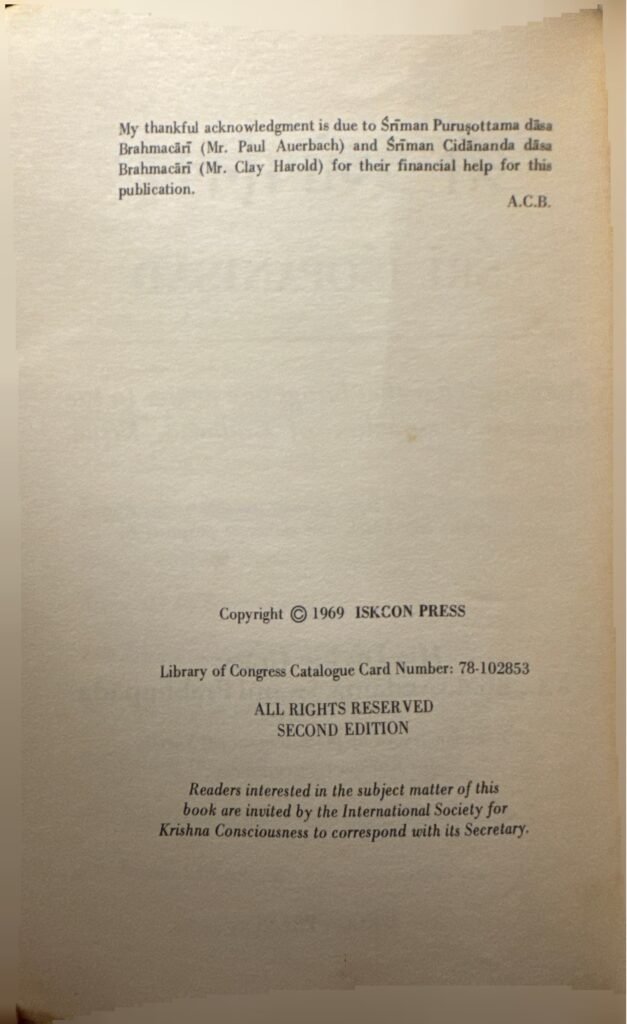
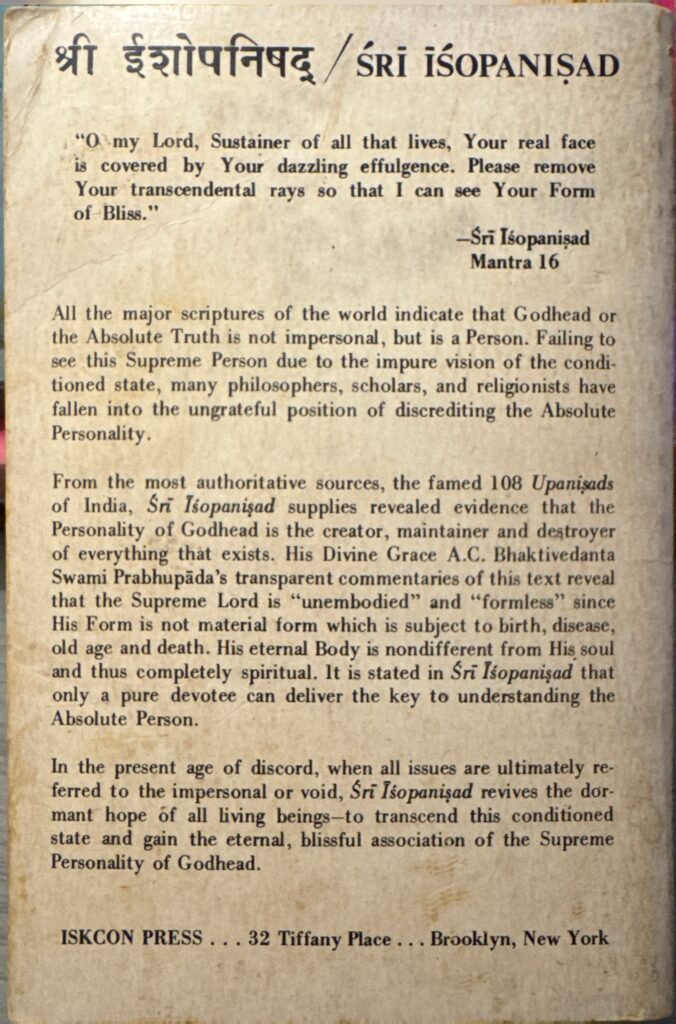
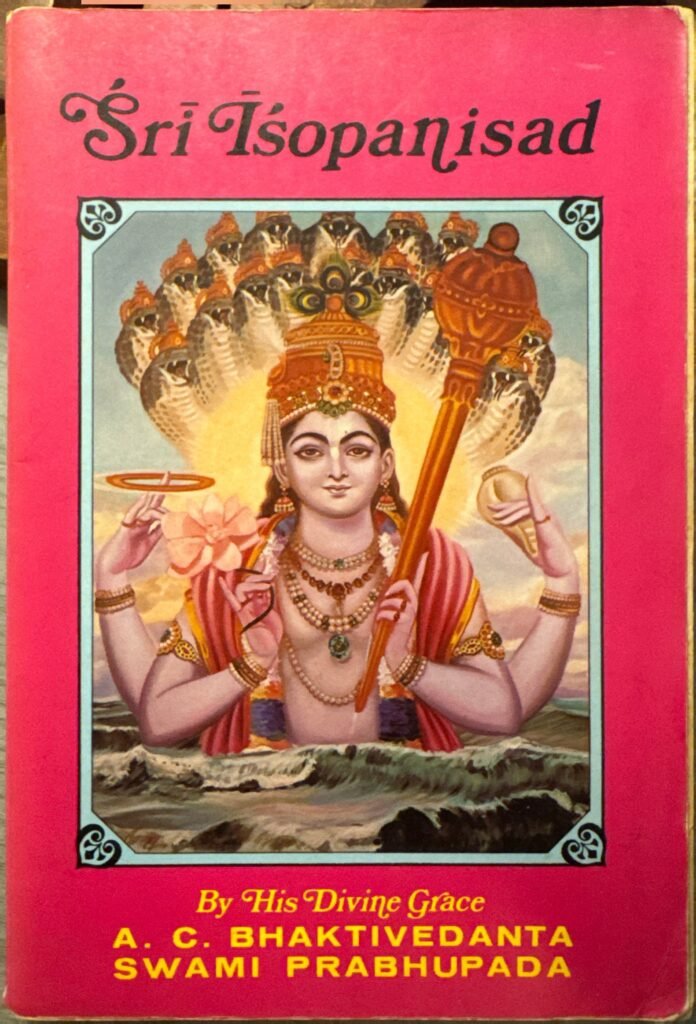
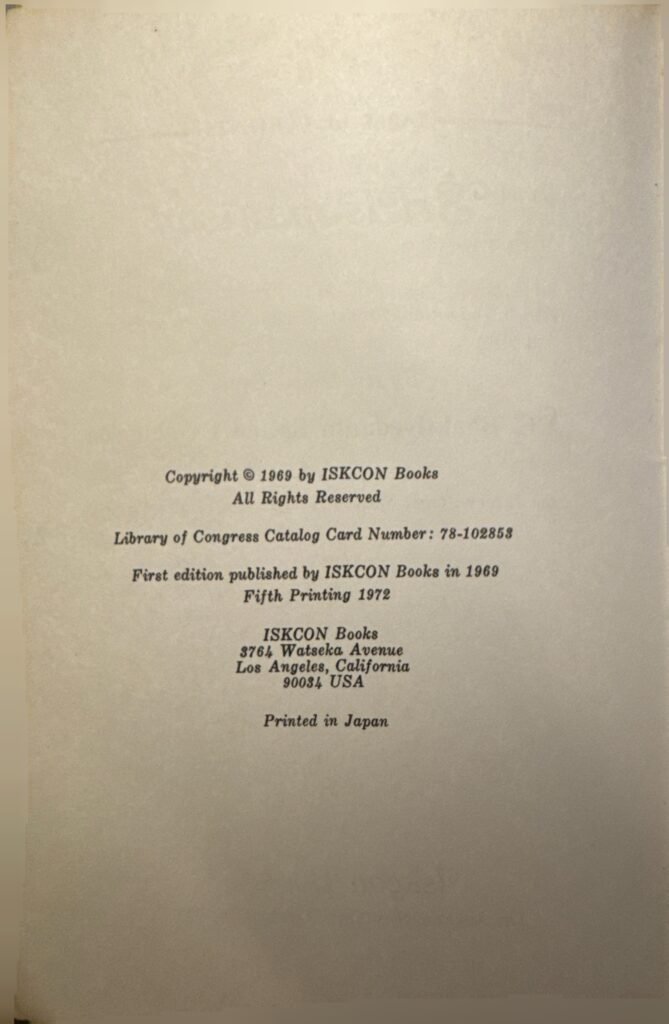
Fifth Printing 1972
Note: The 1972 printing is the last unchanged printing of the book.
Click here to read scanned book.
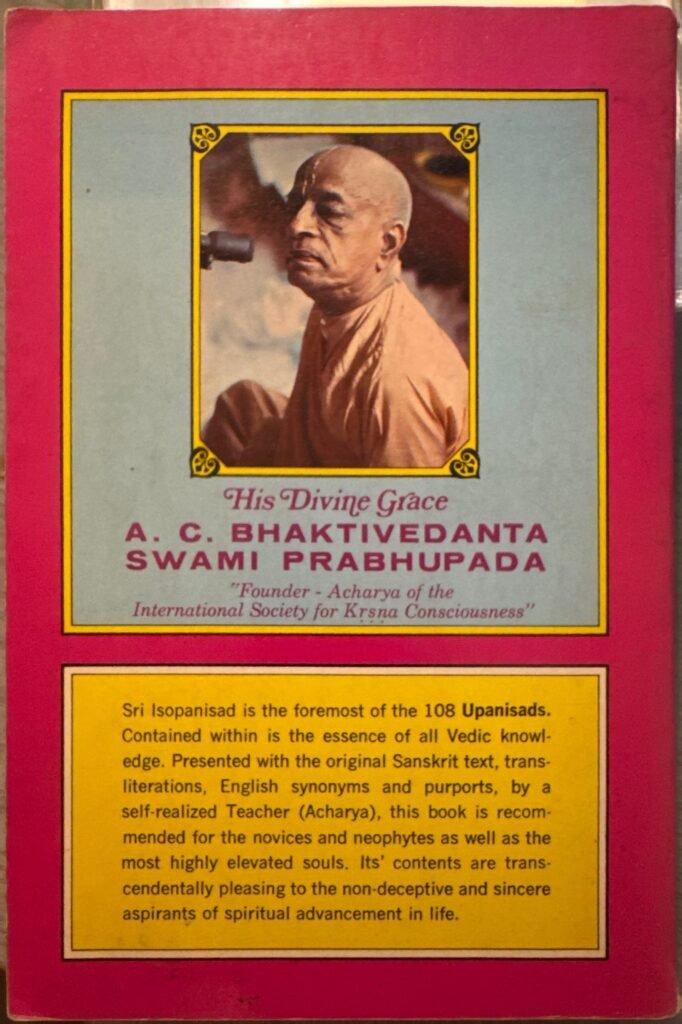
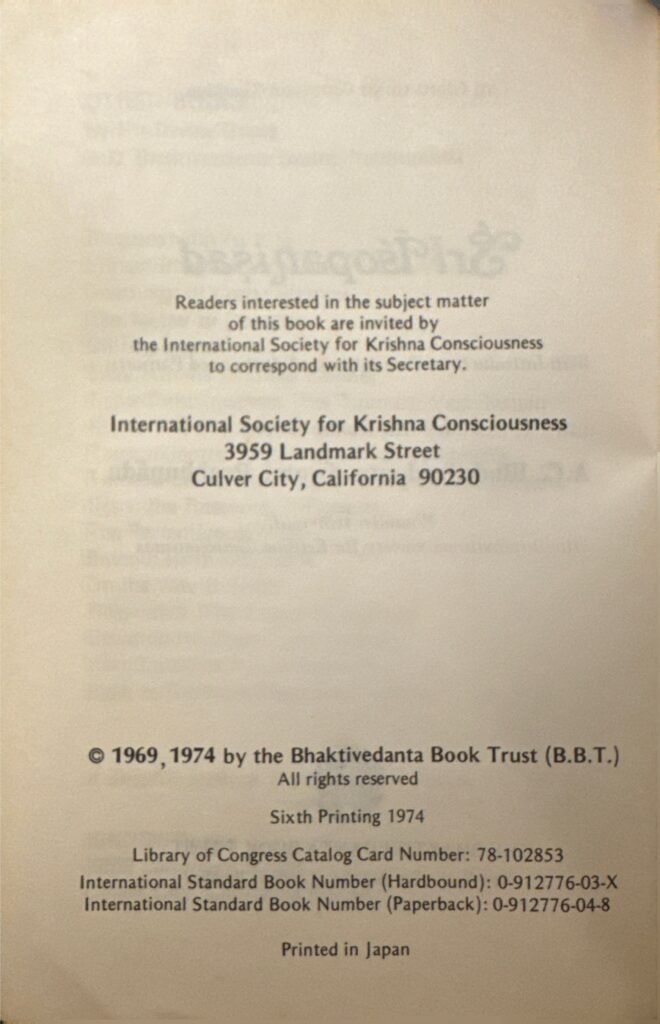
Sixth Printing 1974
Note: The 1974 printing is the first printing to be changed.
Click here to view the book
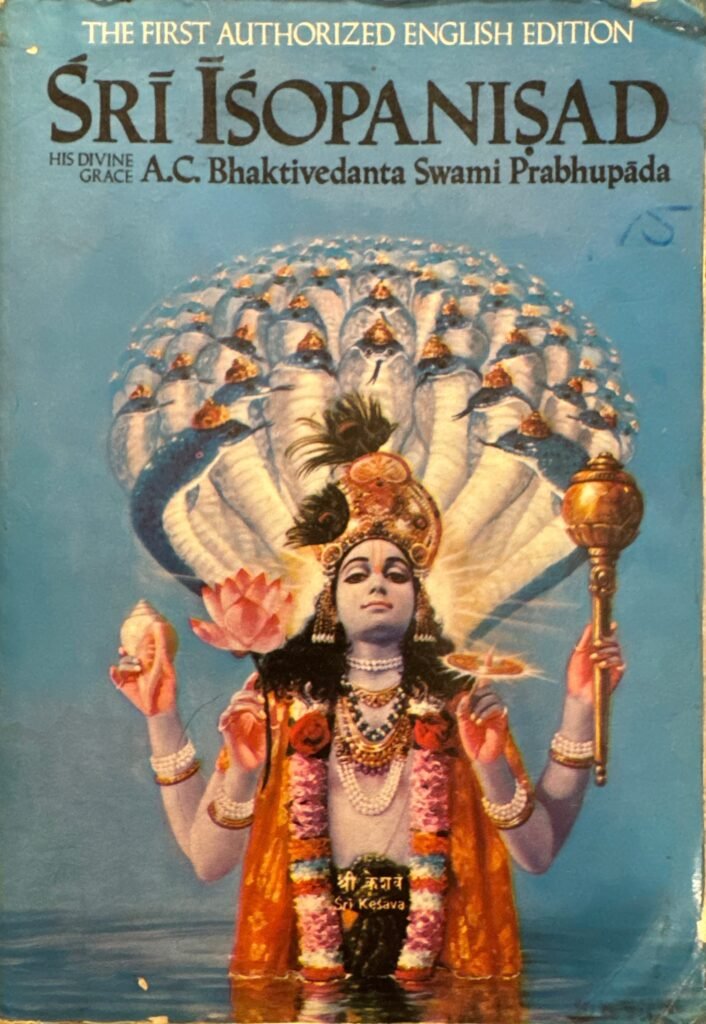
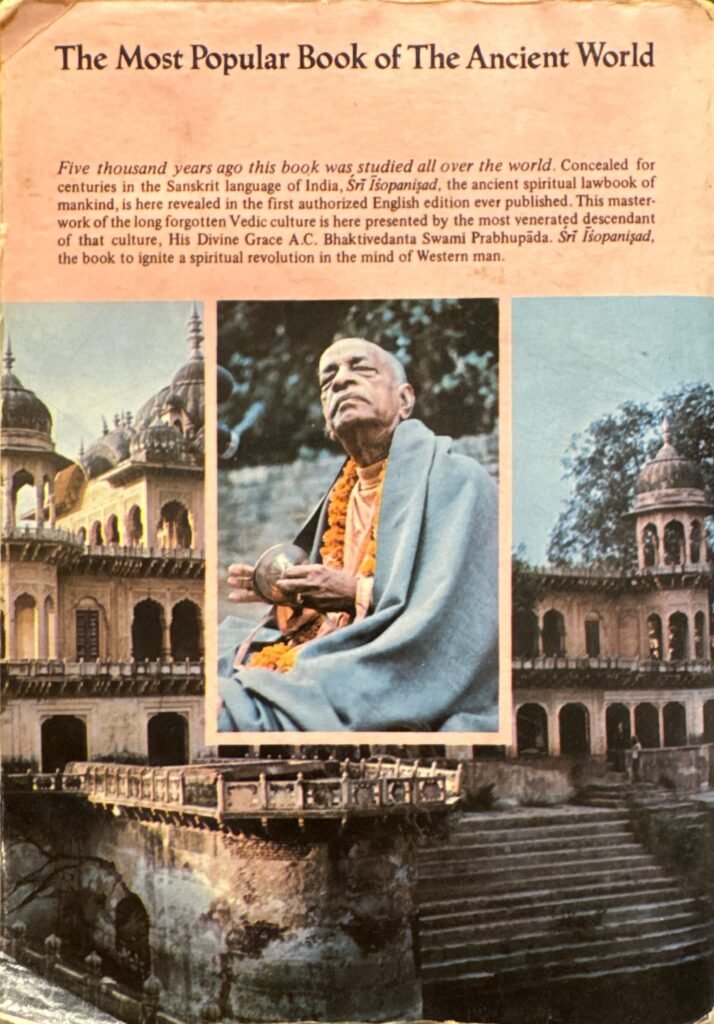
Seventh Printing 1975
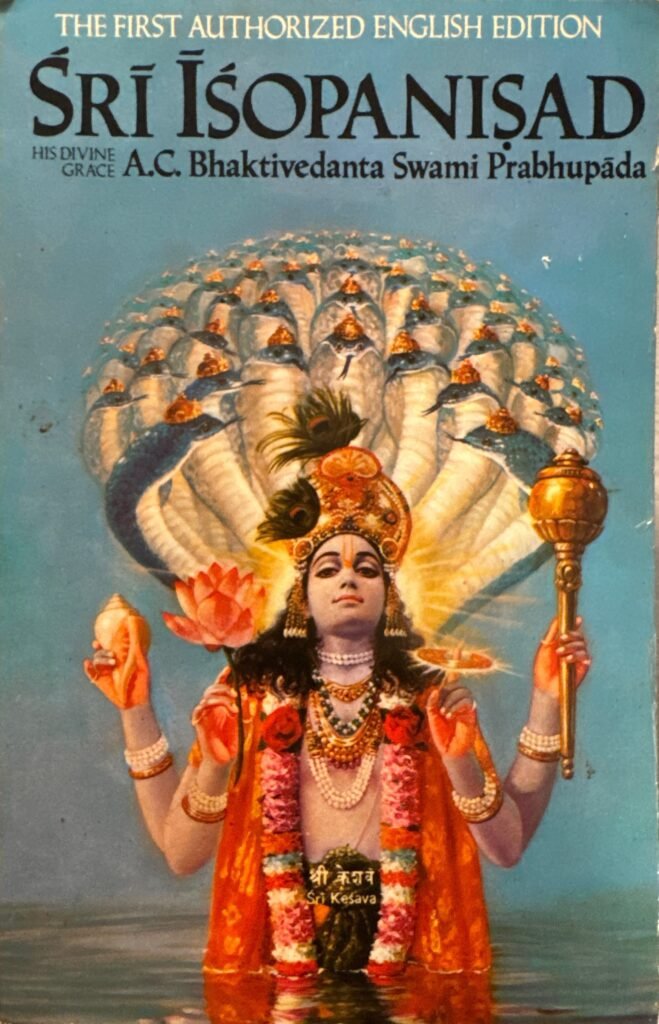
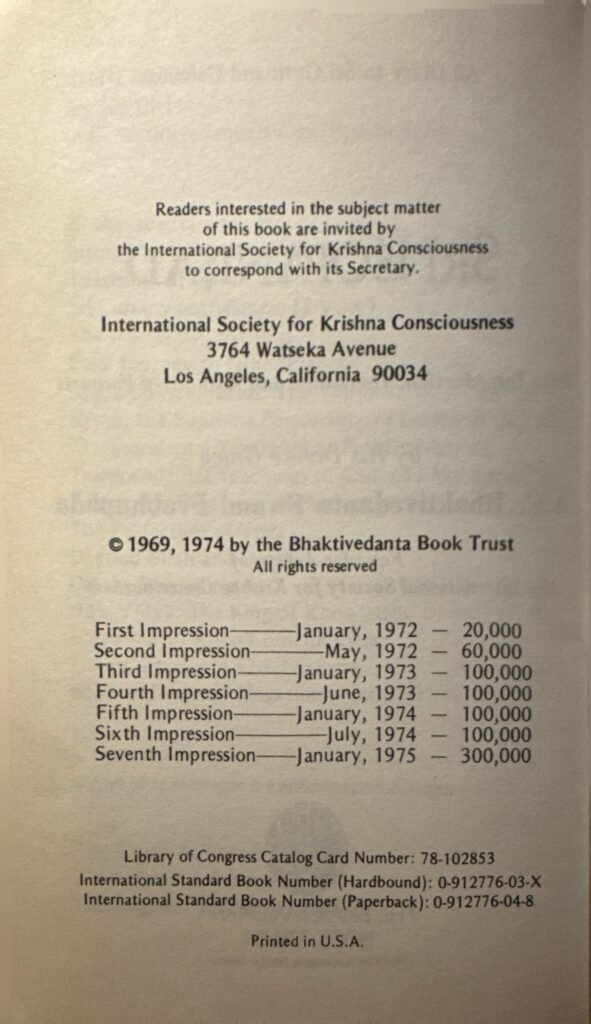
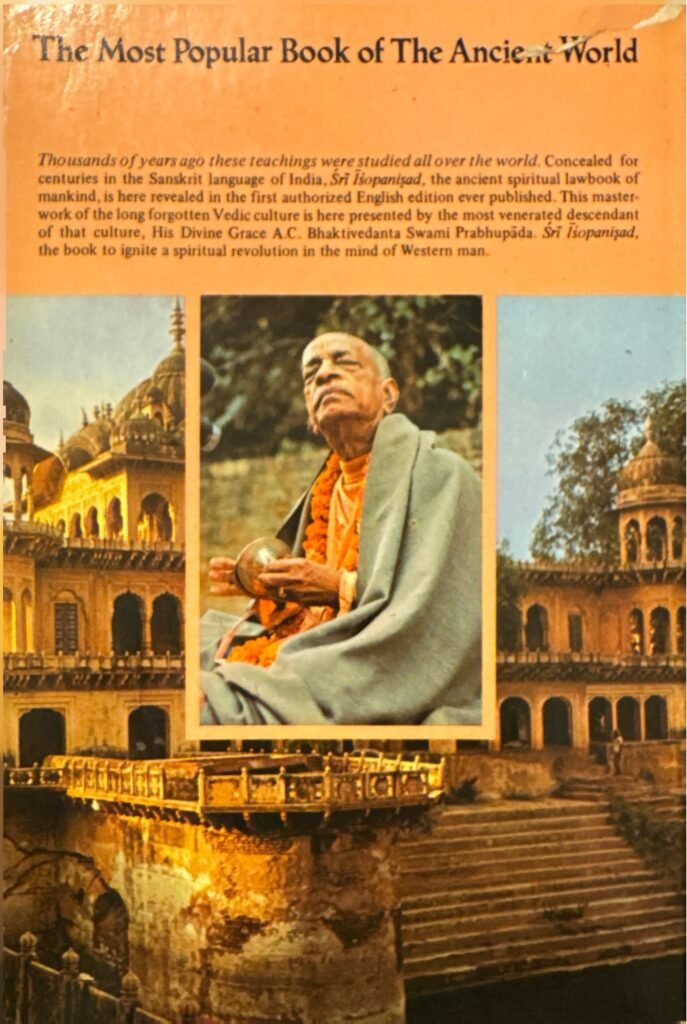
Ninth Printing 1976
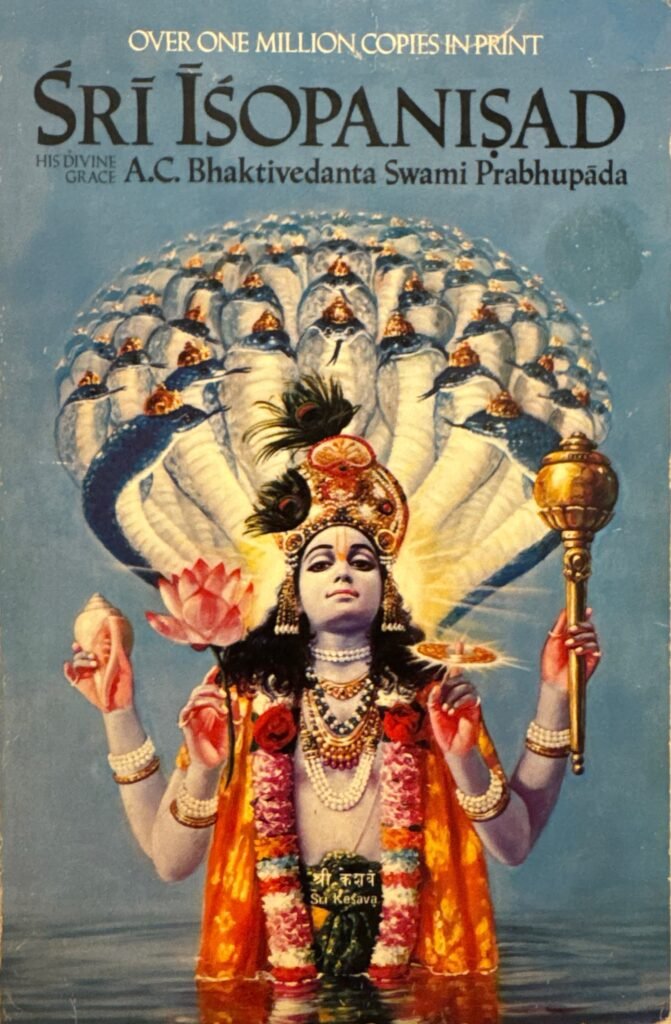
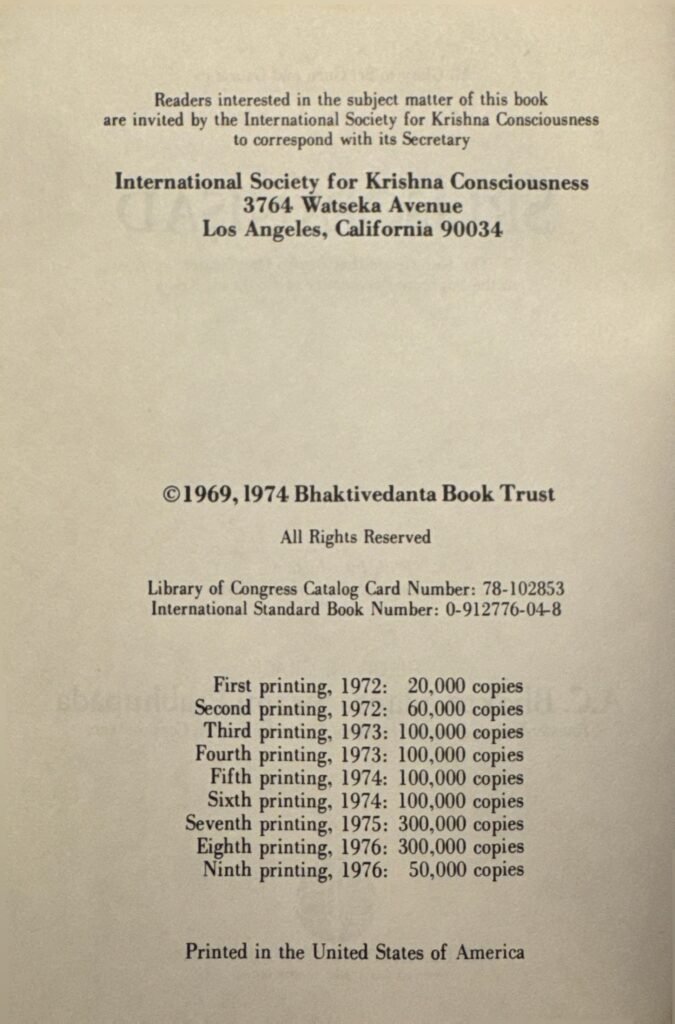
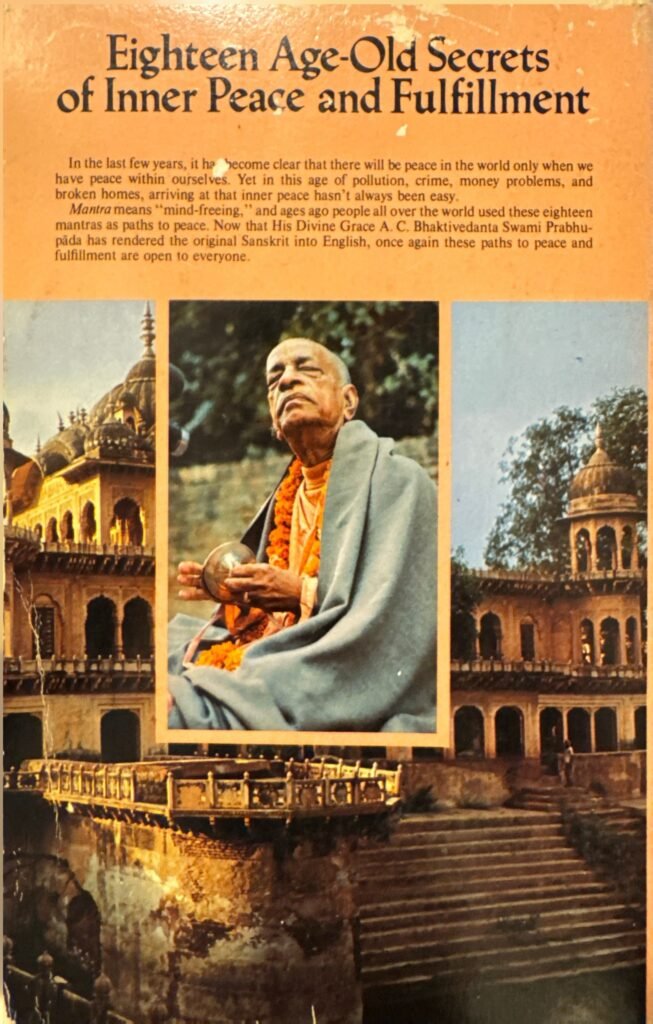
11th Printing 1982
Click here to view sample pages
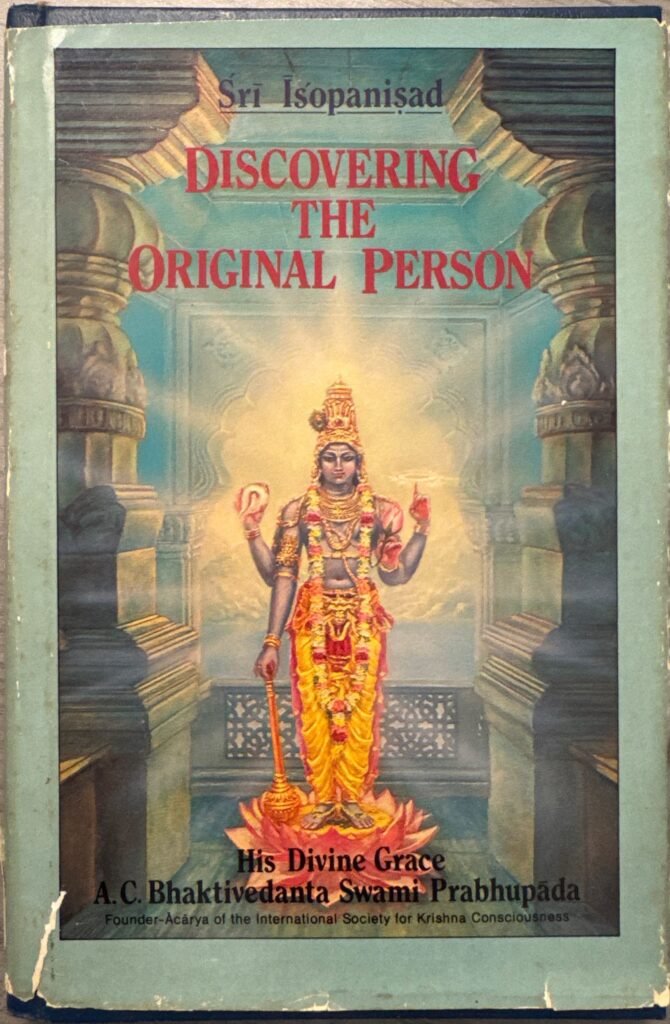
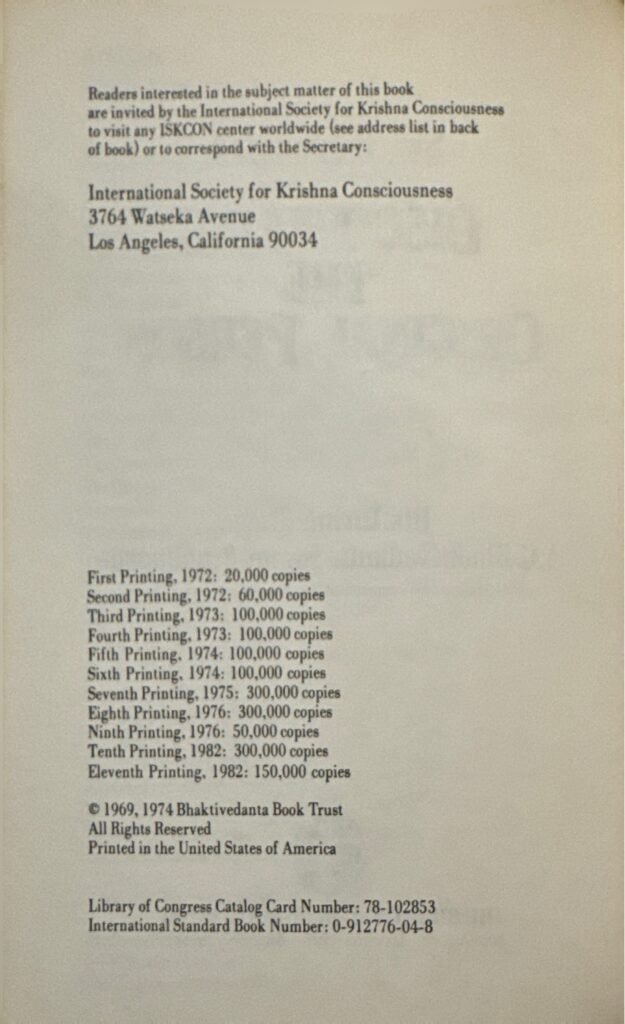
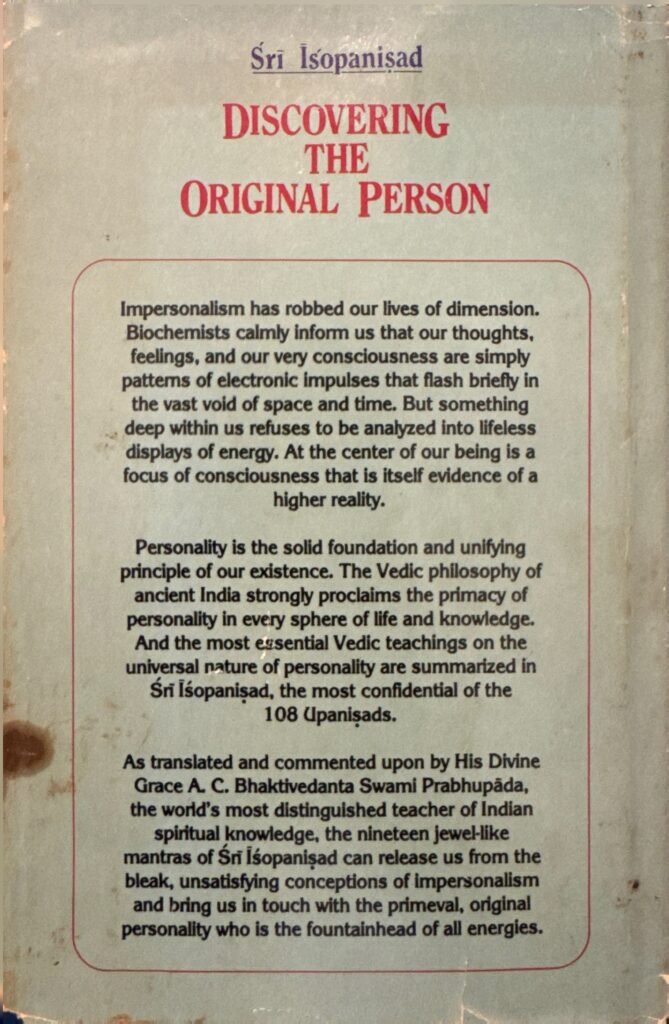
12th Printing 1984
Click here to view sample pages
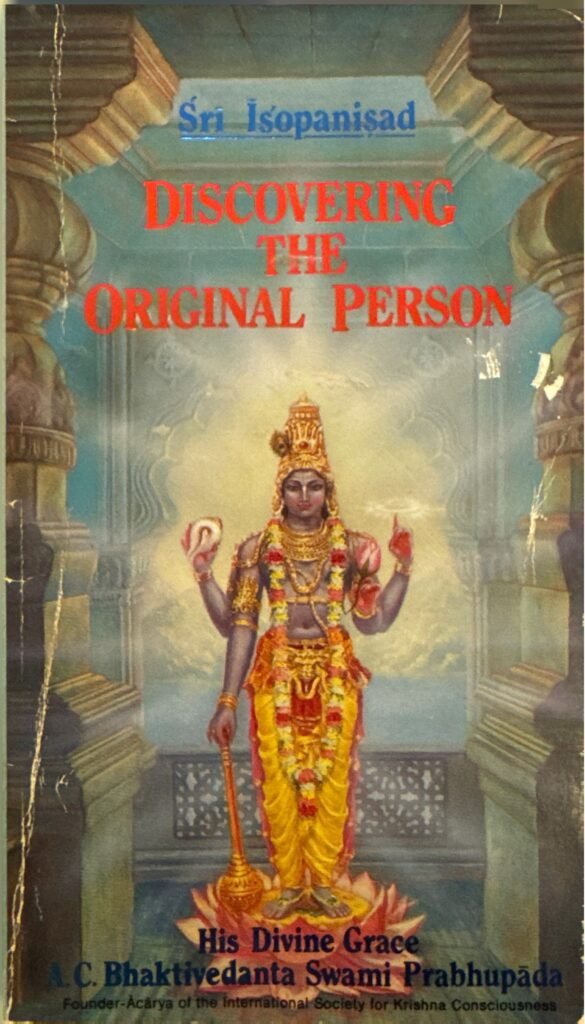
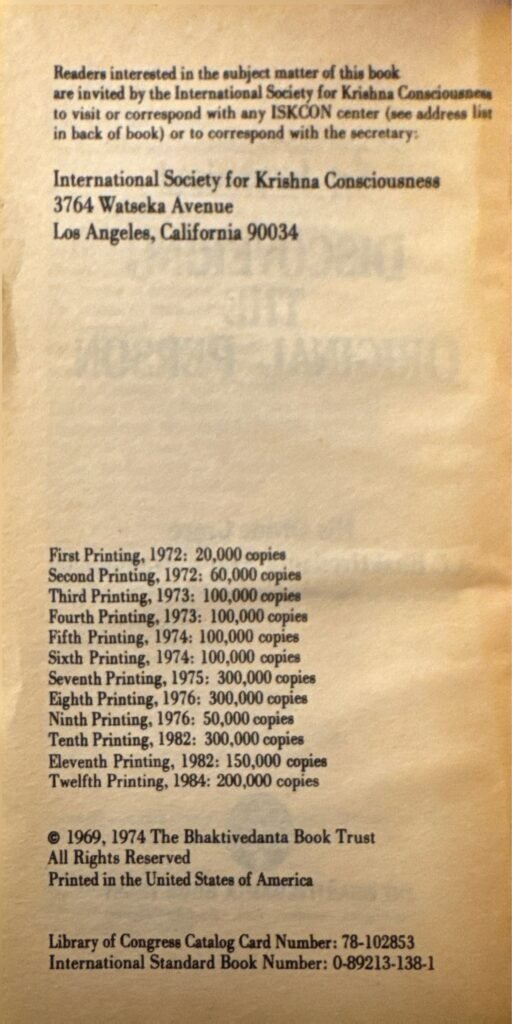
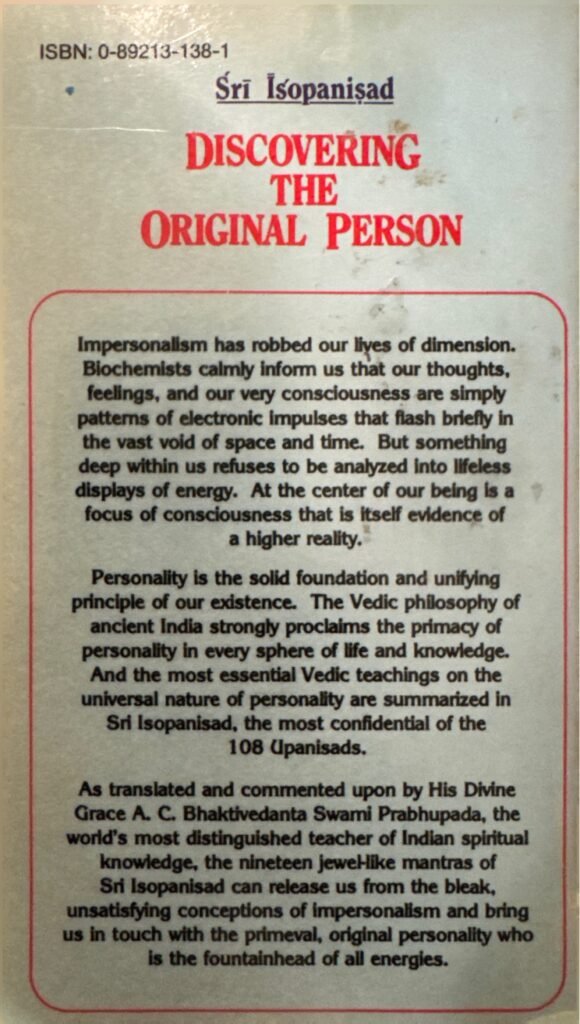
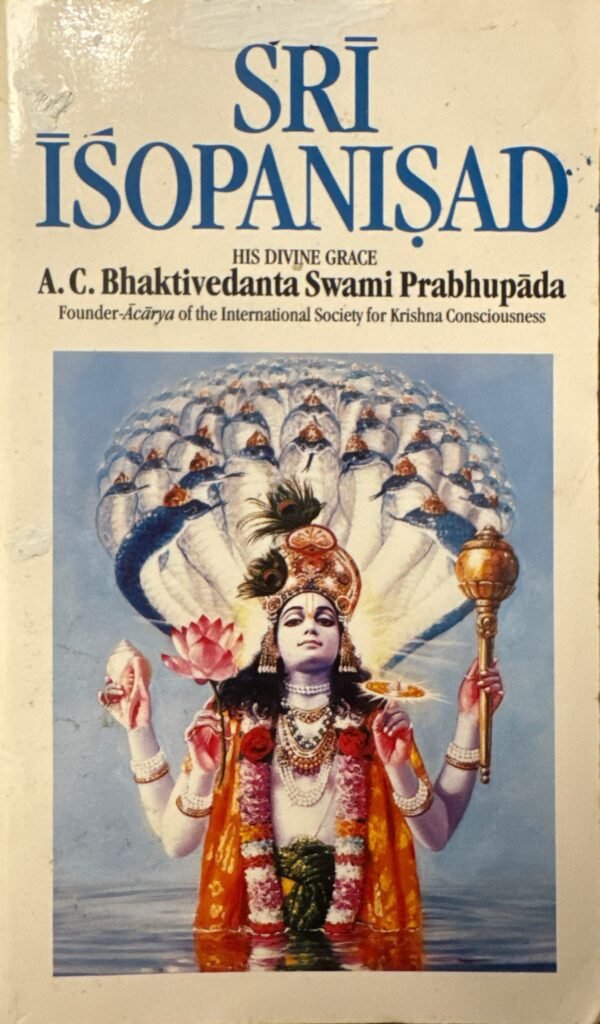
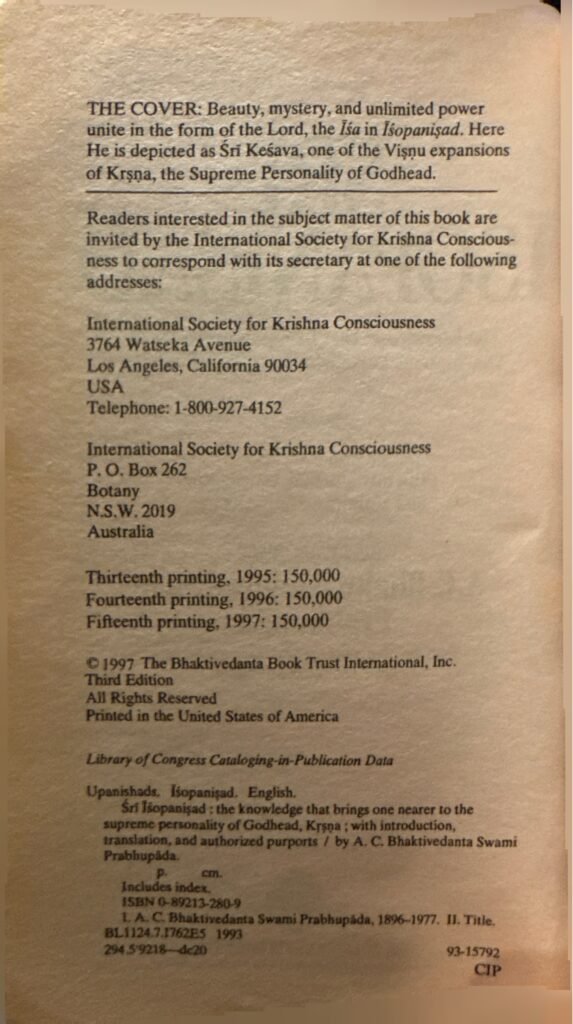
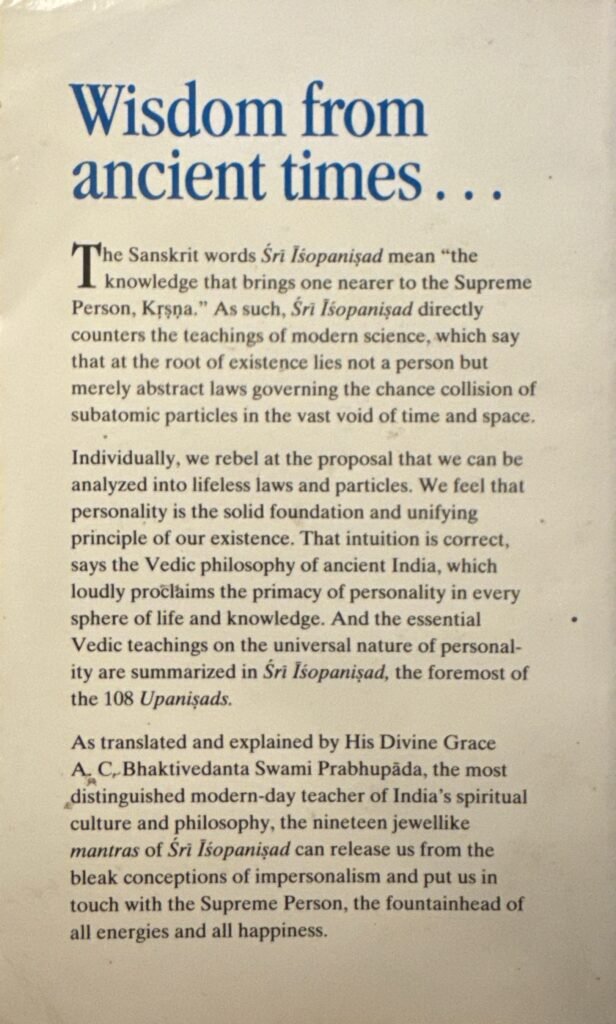
15th Printing 1997
Click here to view sample pages
Krishna Books Inc. Printings
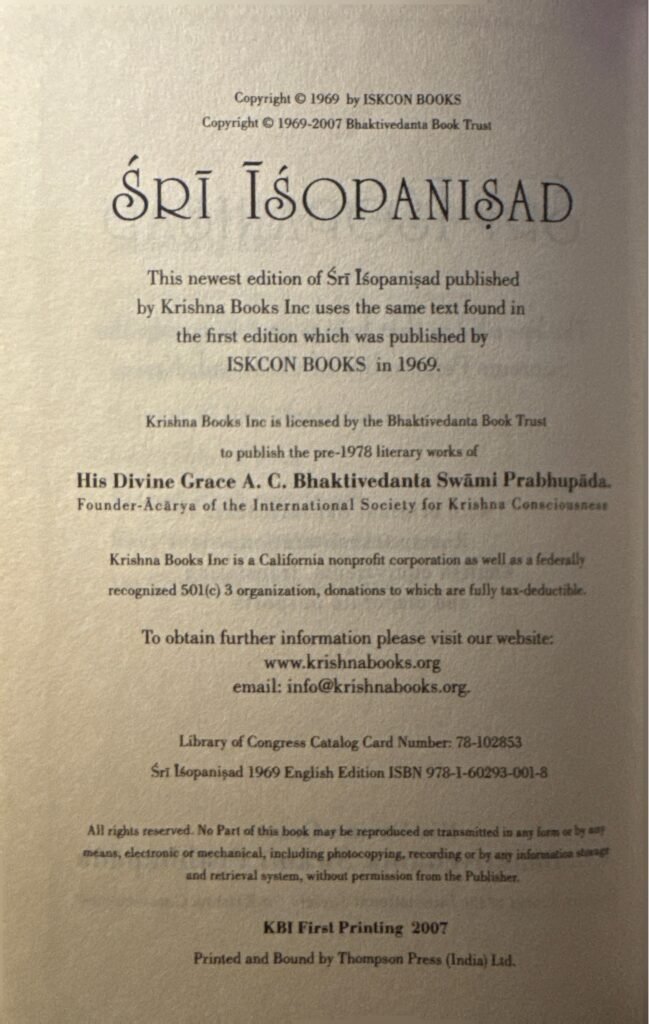
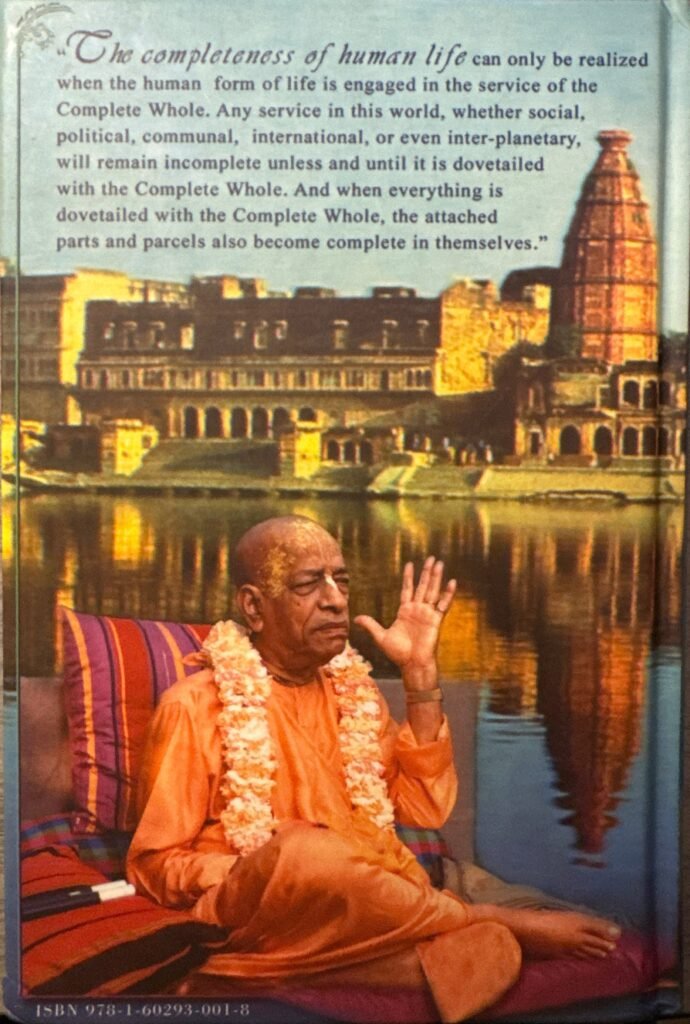
The next two books are reprints of the 1969 edition as far as text. They are hardcovers and color plates were added that weren’t in the 1969 edition. They are printed by Krishna Books Inc. (KBI), an entity licensed by the BBT to print original pre-1978 editions of Srila Prabhupada’s books.
KBI Reprint 2007
Click here to view sample pages
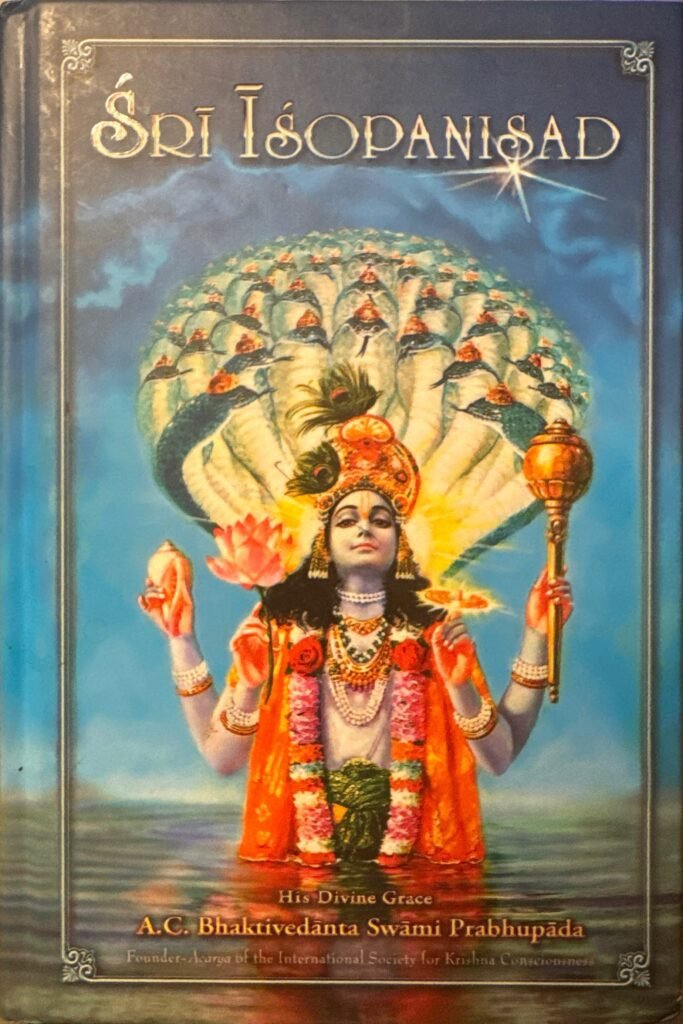
KBI Reprint 2012
Click here to view sample pages